
Samsung is betting on core capabilities like R&D to stay prepared for the new wave of technologies like 5G and IoT (internet of things).

As part of its expansion plans, Jio has announced the roll-out of Internet of Things (IoT) services in association with Samsung, which will help consumers and enterprises.

The latest hike is likely to be followed by another such move next month, said industry players. Before the latest hike, companies had initiated price hikes to the tune of 12-13 per cent in 2021 but they weren't able to fully cover the increase in costs.

Automobile manufacturers, new and old, as well as ancillary suppliers are set to spend a combined Rs 70,630 crore over the next five years on either entering the electric vehicle segment or stepping up their presence in it. Data culled from announcements made by firms shows India, the world's fifth largest automobile market, is poised to receive one of the biggest capex pushes ever to fuel the transition from internal combustion engines to electric motors and batteries as part of a green drive. The EV push, egged on by the government's emphasis on electric mobility to meet its net zero targets, is expected to yield at least 25 electric vehicles - new ones as well as electrified versions of existing vehicles running on internal combustion engines.
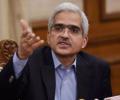
The Reserve Bank of India Governor Shaktikanta Das on Monday said that the "momentum of inflation is on a downward slope" and the central bank would continue to strike a delicate balance between the need to contain price rise and ensure economic growth. The Reserve Bank's inflation projections, Das said, are "robust" but contingent on downside and upside risks associated with the movement of global crude oil prices. The RBI takes into account a particular range within which crude prices are expected to fluctuate considering all the factors that can be anticipated and that can be sort of foreseen as of today, he said.

'The coronavirus impact is much bigger than what the market had predicted. We are helpless and simply watching the market at present. Nothing can be done,' said Anil Devli, chief executive officer (CEO) of Indian National Shipowners' Association (INSA).

'...despite not being ideologically aligned with a vast section of the people of the north east.' 'But the results in Tripura, Nagaland and Meghalaya show that no party, including the BJP, can say that it has really done well.'

Branded and packaged edible oils are currently selling at around 50 per cent premiums over their loose varieties. Hence, products using edible oils would be costlier going forward.

The cryptocurrency will fall in the RBI's domain.

'The recent correction in indices has made the markets cheaper to invest for the long term.'

Companies whose products have not been picked up for distribution in Gujarat under a "non-cooperation movement" include Marico, Dabur, Emami, Britannia, Reckitt Benckiser, and Godrej Consumer Products.

Apex telecom industry body COAI has asserted that spectrum pricing should be kept conducive to market conditions as 5G entails upfront capital investments with monetisation spread over a long-haul, and pricing radiowaves high will only push the players up against the wall. The stage is set for Telecom Regulatory Authority of India (TRAI) to come out with its recommendations on 5G spectrum pricing and other modalities for upcoming auctions, and the announcement from the sector watchdog is expected anytime now. Norms will also be worked out for new frequencies such as 526-698 MHz and millimetre band, that is 24.25 - 28.5 GHz, in addition to bands such as 700 MHz, 800 MHz, 900 MHz, 1800 MHz, 2100 MHz, 2300 MHz, 2500 MHz, 3300-3670 MHz.

Tata Sons stake in the group's listed companies is now worth Rs 9.28 trillion, up 34.4 per cent on a year-on-year (YoY) basis. In comparison, the Government of India's stake in listed central public sector undertakings (PSUs) is currently valued at Rs 9.24 trillion

Rising prevalence of work-from-home and e-learning is driving sales of notebooks and tablets for most brands, but Apple's superior performance has more to do with its product quality.

The severity of the second wave of COVID-19 infections in India poses a key challenge for the FMCG industry and the spread of the virus to rural areas on a relatively higher scale as compared to the first wave is also expected to weigh on industry growth outlook, according to ITC Ltd. There is heightened uncertainty around the timing and shape of the recovery trajectory of overall economic growth in India due to the virus, the company said in its Annual Report for 2020-21. In terms of consumption, urban-led recovery may be relatively muted compared to the first wave as consumers switch to precautionary savings mode and rising healthcare costs eat into household spending, while rural demand may also be blunted by the large-scale spread of the virus to the hinterland in the second wave.

'We will be hoisting the tiranga, but this kind of celebration is uncalled for when the farmers in this country are dying by suicides, their families are ravaged by poverty and farmers are not enjoying any freedom.'

With consumers staying indoors and e-commerce firms extending their reach to a larger number of pin codes, these giants have snatched a larger share from the offline traders this season.
'There is no doubt at all that Jio's disruption of the mobile broadband market was a turning point for India's digital economy.'

Consumers can expect duty-free imports of a range of products like capital goods, some textiles, electronic goods and chemicals from next year after India successfully concluded negotiations on a Free Trade Agreement for goods with the 10-member Association of Southeast Asian Nations in Singapore on Thursday.

A single format and simpler, uniform rules would have kept the service going. In other parts of the world including in the US, managing demand and capacities along with ensuring preventive measures were an issue, but there was hardly any administrative hurdle anywhere.

Billionaire Mukesh Ambani's Reliance Jio on Friday announced deferring the roll-out of the JioPhone Next - the low-priced smartphone it has developed with Google - to Diwali. The phone was previously to be launched on September 10. Ambani at the shareholder meeting of his flagship Reliance Industries in June, had stated that the JioPhone Next will be available for purchase on September 10.

After stepping down from the board with effect from September 30, he will remain as Chairman Emeritus of the FMCG firm, according to a statement issued on Wednesday. The 79-year-old industrialist passed on the baton of GCPL to his younger daughter Nisaba Godrej in 2017 after leading the company for 17 years.

Food delivery apps Zomato and Swiggy reported a nationwide outage on Wednesday. Both the platforms witnessed technical glitches and were unresponsive for almost an hour. Downdetector, a platform that collects status reports from a series of sources, recorded about 3,619 reports of outage against Zomato at 2:05 PM and about 771 reports of outage against Swiggy at around 2:21 PM. According to the sources, the outage was caused by Amazon Web Services (AWS), a cloud-services platform, which runs both platforms. Though Swiggy and Zomato are working now, some customers reported that the issue has not been solved completely and they are not able to place orders and there are payment related issues.

Agri-Food and Veterinary Authority of Singapore had taken samples of the noodles for testing.
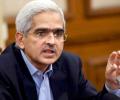
The increasing involvement of Big Tech in the financial system could give rise to concentration risk and there are potential spillovers, which call for closer attention, Reserve Bank of India (RBI) Governor Shaktikanta Das said on Tuesday. "...enormous amounts of consumer data is being generated and leveraged upon by a few entities (the so-called Big Tech) by virtue of their huge customer base. "Such developments raise concerns on concentration risk and potential spillovers as their level of engagement with the financial system strengthens in the years to come," Das said at the Global Fintech Fest 2022.

Russia is among the top buyers of Indian tea, accounting for about 18 per cent of the industry's total exports.

Apart from the growing adoption of the internet in the country, brands are drawn to the agility of the medium, its targeted and data driven approach and the increasing cost of offline channels for sales and distribution.

The Rs 1.5-trillion-a-year industry has ended the year with a 30 per cent fall in sales because after a steady recovery in the festive season, multiple factors dashed its hopes of revival at the end of the year.

Despite the demonetisation of 2016 and the rise in digital transactions that followed, the economy's dependence on cash has remained as high as ever. So when the Reserve Bank of India (RBI) introduced a pilot project of its version of digital cash - called the central bank digital currency (CBDC) - on December 1, many questions were asked. Can the CBDC replace physical cash, even partially? Can it match cash in terms of convenience? Are CBDC transactions truly anonymous?

'Summer Somewhere exclusively creates clothes that are kind to the planet.'

'Who would think of making a bank of poor women? She had vision and boldness.'

Exporters on Thursday demanded fiscal incentives, tweaking in customs duties on certain products and credit at affordable rates in the forthcoming Budget to boost exports and create jobs. In a pre-budget virtual meeting with Finance Minister Nirmala Sitharaman, the Federation of Indian Export Organisations (FIEO) said the depreciation of the rupee against the US dollar is affecting exports' competitiveness and the sector requires more support. "Creation of employment is the biggest challenge faced by the country...We would urge the government to provide fiscal support to units which provide additional employment in the export sector," the exporter's body said.

Recently, South Korean Foreign Minister, Chung Eui-yong, dialled his Indian counterpart, S Jaishankar, in New Delhi. His government, he said, "regretted the offence caused to the people of India". A day earlier, India had summoned the South Korean ambassador to express its "strong displeasure" over "an unacceptable social media post".

'Bharat has been leading, but it cannot carry India as the bulk of the sales come from India in terms of volume and profitability.'

Mods let Lenovo fight the features battle with premium players like Apple and Samsung and keep the price of the phone low, thereby drawing in aspirational customers who can't afford high-priced feature-rich handsets.

Durable, automobile and real estate players have been lobbying hard for a tax cut, saying it will boost demand.
India may be the largest consumer of gold in the world; but not only that the quantity of gold that the country produces is dismal, but it plays no influencing role in determining the pricing of the yellow metal.

The primary and immediate impact of a depreciating rupee is on the importers who will have to shell out more for the same quantity and price. However, it is a boon for the exporters as they receive more rupees in exchange for dollars. The rupee depreciation has wiped away some of the gains that would have accrued to India from international oil and fuel prices dropping to pre-Ukraine war levels.

India serves as the company's R&D hub as it morphs into a health tech major.

For the second straight year, the gems and jewellery industry is set for almost a washout of business on Akshaya Tritiya as only about 10 per cent of pre-Covid sales of 2019 are expected on Friday amid the raging pandemic sapping footfalls and purchasing power of people.
